HomeSLP
First Words: 10 Activities for Every Day
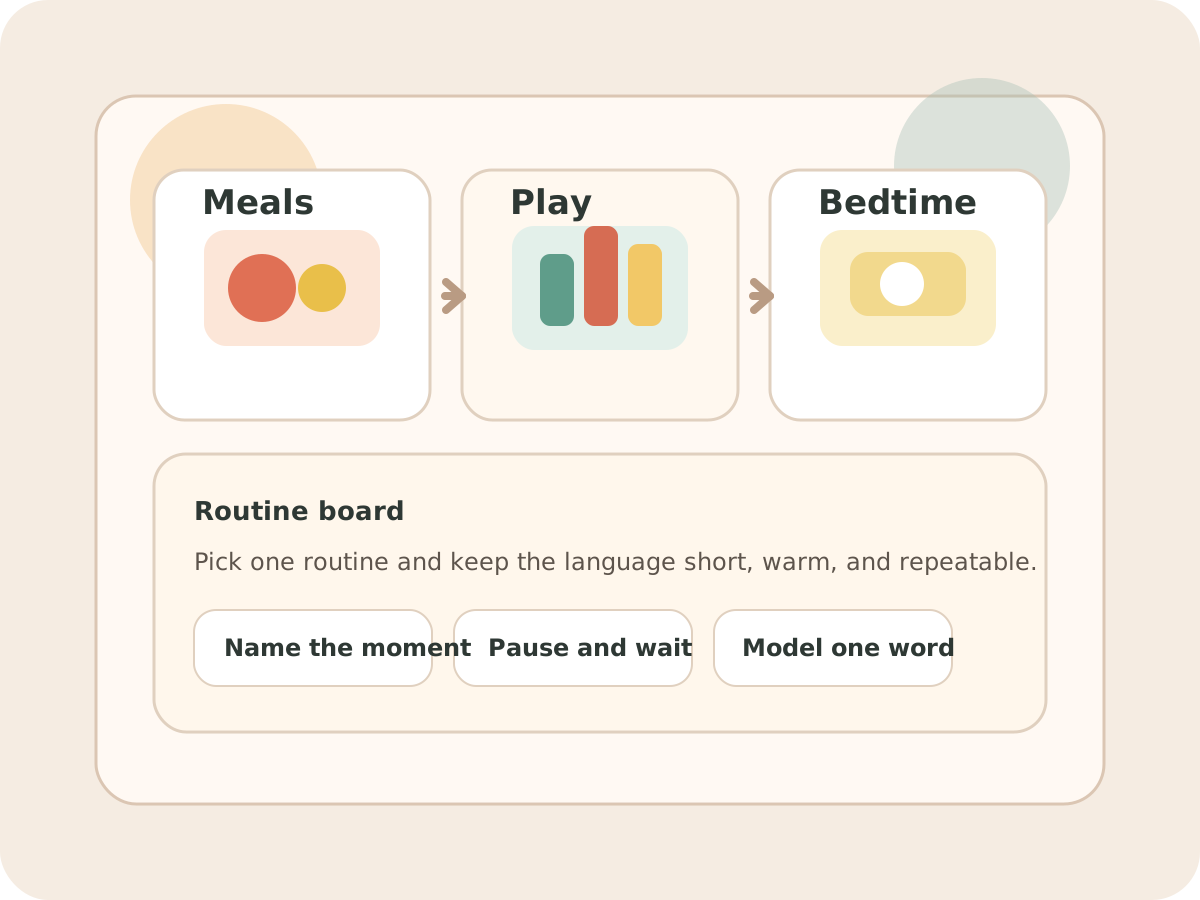
Simple, everyday activities to encourage first words during morning routines, mealtimes, play, and bedtime.
Parents of children 10-24 months working on first words
First words handout summary
39 sec
Morning Routine Activities
Morning routines are full of repetitive, predictable moments — exactly what children need to learn first words. Use the same words and phrases every morning to build familiarity.
- Wake up routine: Say 'up! up! up!' as you lift your child out of the crib. Pause and wait for them to reach up or vocalize before lifting.
- Diaper change: Narrate 'diaper off... diaper on!' Use 'wet' and 'dry.' Count toes or fingers.
- Getting dressed: Hold up two options and name them: 'shirt or dress?' Wait for a point, reach, or sound before dressing.
Tip
Predictability is your superpower. When your child knows what comes next, they can start to anticipate and attempt the words themselves.
Mealtime Activities
Mealtimes happen multiple times a day, making them one of the richest opportunities for language learning. Children are highly motivated by food, which makes them more likely to try to communicate.
- Offer small portions so your child has to request 'more' — model the sign and the word together.
- Name every food as you serve it: 'banana! Here's your banana.' Use the same word each time.
- Create choices: 'milk or juice?' Hold up both and wait. Accept pointing, sounds, or words.
- Use 'all done' with a gesture when the meal is finished. Pause before clearing the plate to see if they'll signal.
Play Activities
Play is the most natural context for language learning. Follow your child's lead — talk about what they are interested in, not what you want them to play with. Simple cause-and-effect toys are great for early words.
- Bubbles: Blow bubbles and wait. Say 'pop! pop! pop!' Model 'more' or 'bubble' and wait before blowing again.
- Ball play: Roll a ball and say 'roll!' or 'go!' Take turns and model 'my turn, your turn.'
- Stacking blocks: Build up and say 'up, up, up!' then 'crash!' when they knock them down. Repeat.
Tip
The magic ratio is 1:1 — for every word you say, give your child an equal pause to respond. Most parents talk too much and wait too little.
Bath and Bedtime Activities
Bath time and bedtime routines offer calm, focused one-on-one time that is ideal for language practice. The relaxed atmosphere helps children feel safe to experiment with sounds and words.
- Bath: Label body parts as you wash ('wash your toes!'), pour water and say 'splash!' or 'pour'
- Bath toys: 'duck! duck says quack!' Make animal sounds — they are often easier than words.
- Bedtime books: Read the same book every night. Pause at predictable parts and let your child fill in.
- Goodnight routine: Name things as you say goodnight: 'night-night bear, night-night light'
Tips for Success
The strategies above work best when you keep these key principles in mind. Language learning is a marathon, not a sprint. Consistency and patience matter more than perfection.
- Model, don't test: say the word yourself instead of asking 'what's this?' or 'say ball'
- Wait 5-10 seconds after modeling a word — silence is where learning happens
- Accept any attempt: a sound, a point, a look, or a word approximation all count
- Be face-to-face: get down to your child's level so they can see your mouth
- Repeat, repeat, repeat: children need many repetitions in meaningful contexts before they say a word
- Keep it fun: if your child is frustrated or disengaged, stop and try again later
Note
Research shows children need many repetitions in meaningful contexts — often dozens of times or more — before they use a new word. Every repetition counts, even if it doesn't feel like progress.
This handout is for educational purposes and does not replace professional evaluation or treatment. If you have concerns about your child's development, consult a licensed speech-language pathologist.
HomeSLP — homeslp.onrender.com